KILIMANJARO
MARANGU ROUTE
Most intresting Facts about Marangu Route
Nickname: The “Coca-Cola” Route. This historic nickname comes from the days when you could buy soft drinks along the trail, distinguishing it from the more strenuous “Whiskey” routes.
Accommodation: A-Sleeping Huts are provided at each camp. These are basic but offer dormitory-style bunk beds, protecting you from the elements.
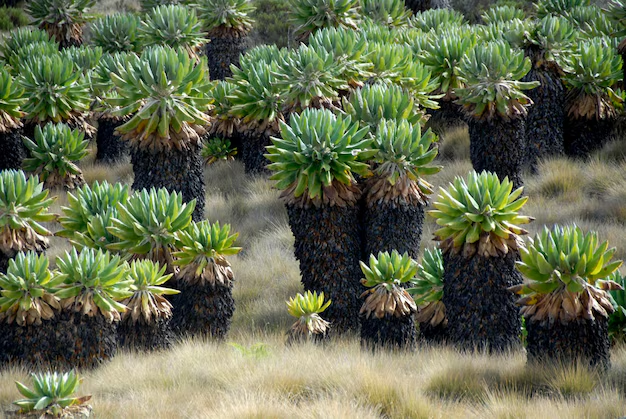
Scenery: A scenic, direct route through the mountain’s southeastern side, passing through lush rainforest, heather moorland, and the dramatic alpine desert of the Saddle.
The Marangu Route is best for
Who is this route for?
First-time trekkers who prefer the comfort of a hut over a tent.
Those on a slightly tighter budget (it's often among the more affordable options).
Climbers who choose the 6-day itinerary to maximize their acclimatization.
EMBARK MARANGU ROUTE
5 DAYS MARANGU ROUTE
6 DAYS MARANGU ROUTE
DAY HIKE VIA MARANGU ROUTE
Frequently Question Asked
This is a historic nickname from the early days of climbing. As it was the first and most established route, it was possible to buy bottled soft drinks like Coca-Cola at the huts, unlike on the more remote “Whiskey” routes (like Machame), which were considered tougher and more rugged.
The standard itineraries are 5 days and 6 days. The 5-day version is not recommended due to a very low success rate. The 6-day itinerary is highly advised as it includes an extra acclimatization day.
While it has the most gradual slope and the comfort of huts, it is not necessarily the easiest for summit success. Its shorter duration (especially the 5-day trek) and rapid ascent profile make altitude sickness a significant challenge. Many consider the longer, more gradual routes like the 7-day Lemosho to be “easier” in terms of acclimatization and success.
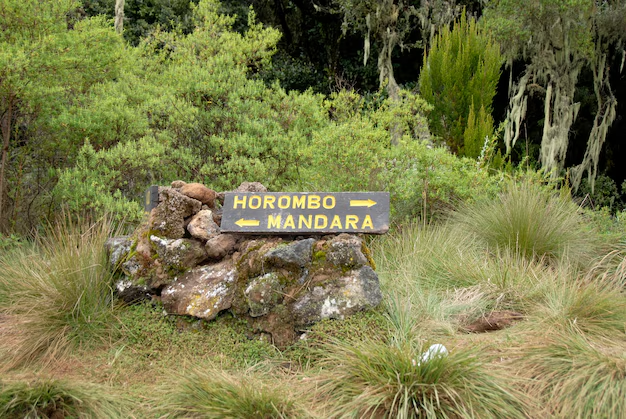
The huts are basic but provide excellent shelter. They are dormitory-style with bunk beds. You will need your own sleeping bag and mat. The lower huts (Mandara and Horombo) have basic running water and simple dining halls. Kibo Hut, the highest camp, is more spartan with no running water.
It has the lowest overall success rate of all the main routes, primarily due to many climbers attempting the shorter 5-day itinerary. Opting for the 6-day itinerary significantly increases your chances of reaching Uhuru Peak.
Altitude Sickness. The ascent profile is relatively fast, not allowing as much time for the body to adapt to the high altitude as other, longer routes.
You descend via the same long, rocky path you ascended. This can be very hard on your knees over such a long distance, making trekking poles highly recommended.
Pros of the Marangu Route
-
Hut Accommodation: You sleep in huts, which means no tents to set up and more protection from wind and rain. This is a major draw for many.
-
Relative Comfort: The huts have basic dining areas, and some even have simple running water in the lower camps.
-
Gradual Ascent: The initial days involve a steady, manageable climb.
-
Same Path Up & Down: You ascend and descend on the same trail, which some climbers find reassuring.
Cons of the Marangu Route
-
Lower Success Rate: This is the route's biggest drawback. The shorter 5-day itinerary and the rapid ascent profile offer poor acclimatization, leading to a higher chance of altitude sickness.
-
Less Scenic Variety: Because you go up and down the same path, you see less of the mountain's diverse landscapes compared to routes like the Lemosho or Northern Circuit.
-
Can Be More Crowded: As one of the oldest and most well-known routes, it tends to be busier than others, especially during peak season.
-
The Descent: The long, relentless descent on the same rocky path can be tough on the knees.